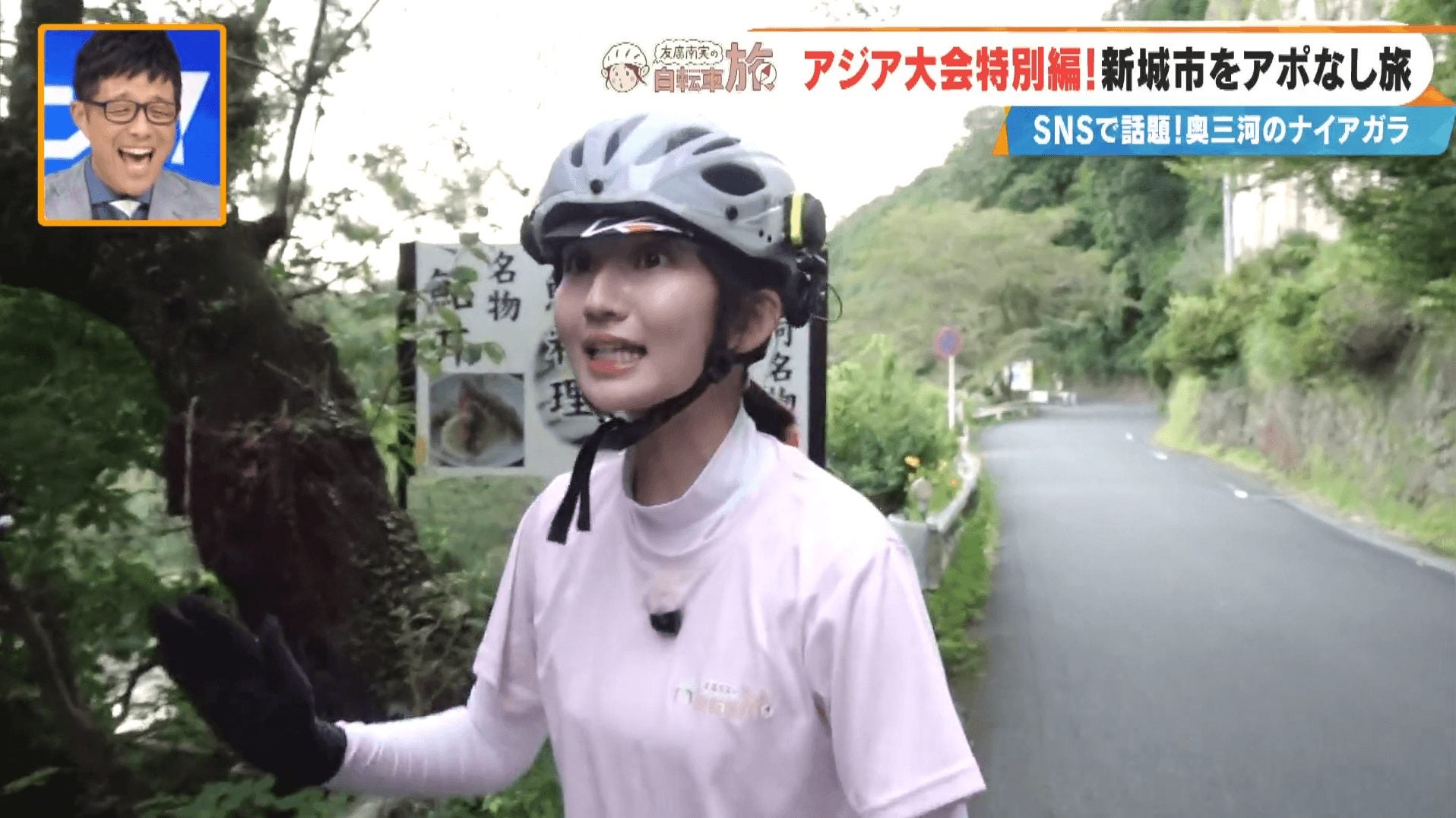
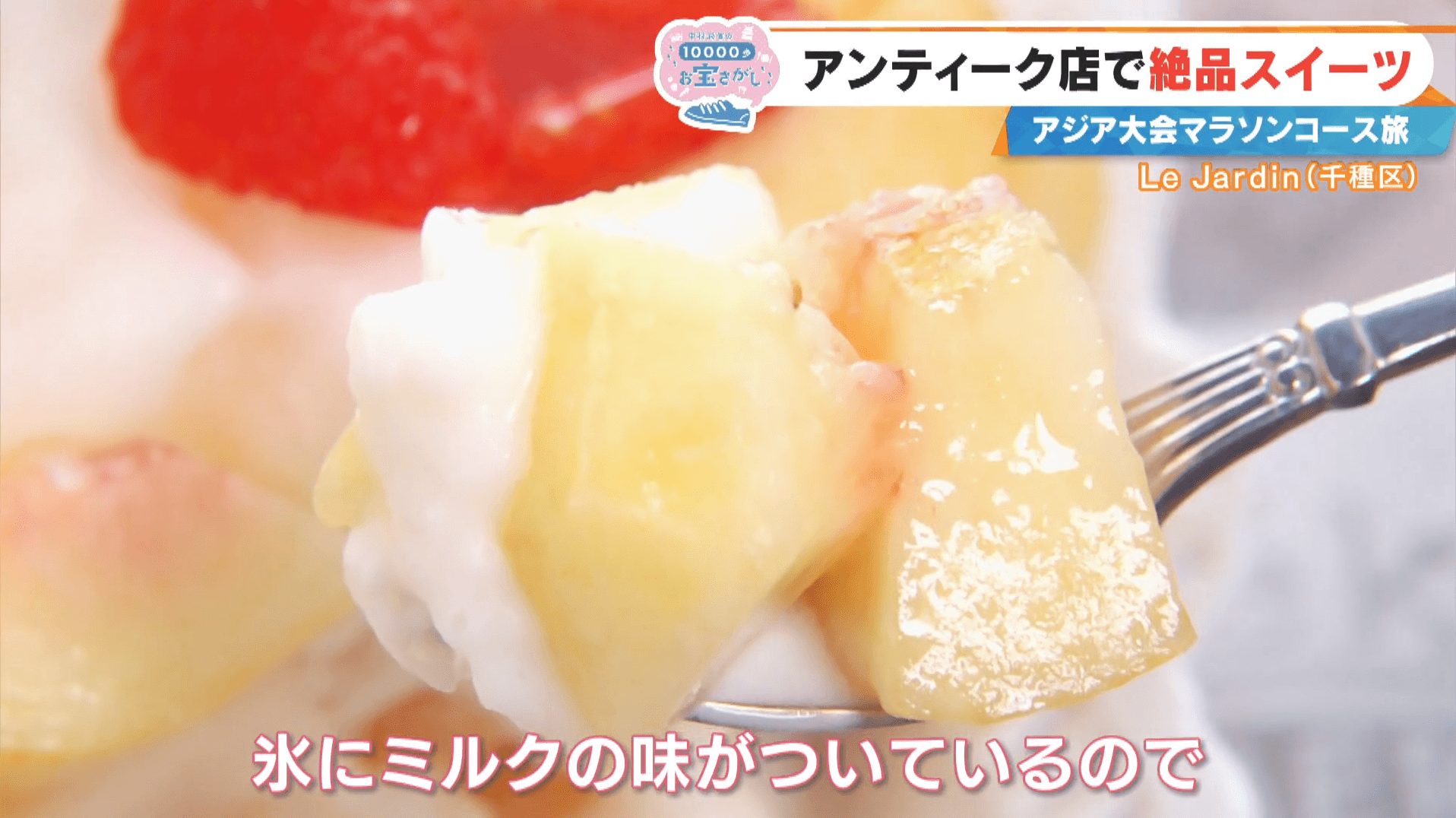
“I like it better than Gifu Tanmen” What is the store-limited special menu “Gifu Tan○○”? Special cooking method revealed
Index
"Ota x Ishii Deraraba" is a variety show where Bakusho Mondai's Hikaru Ota and TV Host Ryoji Ishii delve deep into the classics of the Tokai region! This time, it's a special episode verifying viewer submissions about "things I didn't know about the Tokai region." We thoroughly investigated little-known information about well-known companies and other classic topics in the Tokai region. (Prices are as of the time of filming)
A company in Aichi invented the QR code
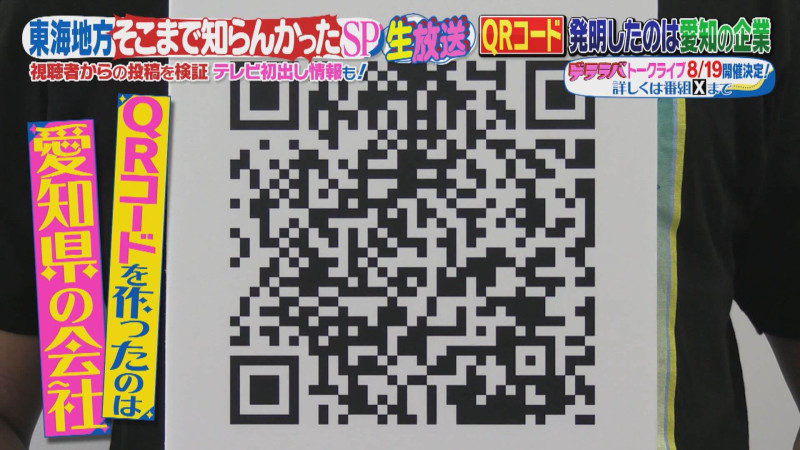
A viewer's submission was, "A company in Aichi invented the QR code."
A QR code is like a barcode that can store a large amount of text information, such as URLs, in a black and white pattern. When you scan it with a smartphone, it automatically connects to the linked destination, making it very convenient. It is used for smartphone payments, electronic tickets, train platform gates, and even for offerings at shrines.
In Sakae, Nagoya, when asked if they knew the company that created QR codes, people on the street answered, "Denso."
Denso, headquartered in Kariya City, Aichi, is a Toyota group company that manufactures automotive parts. According to Mr. Nojiri, whom we met at Denso's headquarters, QR codes began development in 1992 and were announced in 1994.
Mr. Nojiri was the leader of the QR code development team. He originally worked on developing electronic devices for automobiles, but he started developing 2D codes in response to a request to make invoice information readable by computers.
There has been a theory reported in TV and newspapers about the secret birth of QR codes, stating that they were inspired by the Go board with its black and white stones. When asked about this theory, it seems that a Go-loving employee among the development members got some kind of hint, but the code that became the basis of QR codes already existed in the 1980s in the United States and elsewhere. Mr. Nojiri and his team referred to these preceding 2D codes and came up with a code that had all three characteristics: high density, high speed, and large capacity.
By the way, QR stands for "Quick Response." It was named to mean "a code that can be read quickly."
QR codes can read data from the remaining information even if a part of them is hidden. Approximately 30% hidden is the limit for QR code readability.
By the way, the rumor that "QR codes are not patented" is false. They are patented, but the rights are not asserted. Mr. Nojiri reflected, "I don't think the market would have expanded this much if we hadn't let everyone use it freely."
Some stores of the closed Meitetsu Department Store have reopened
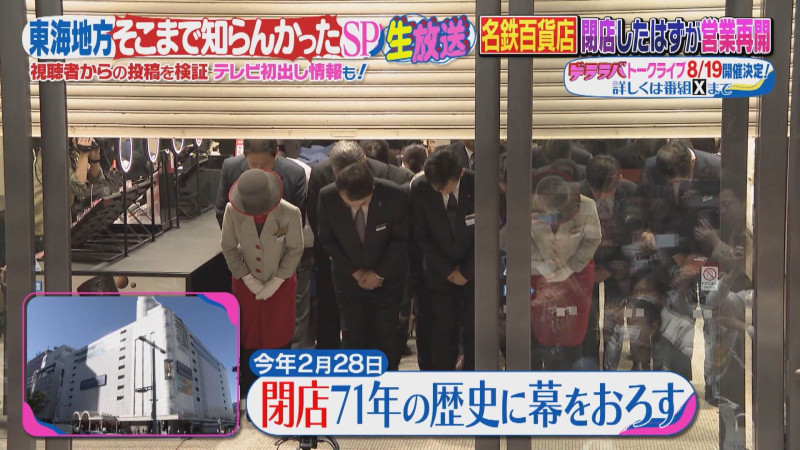
The next submission was, "Some stores of the closed Meitetsu Department Store have reopened."
Meitetsu Department Store was a terminal department store directly connected to Meitetsu Nagoya Station, which opened in 1954. It closed its 71-year history on February 28, 2026. To witness its final moments, crowds gathered not only in front of the store but also on the sidewalk across the street.
Five months after the much-regretted closure. To confirm the truth that some stores have reopened, we directly asked a Meitetsu employee.
According to Mr. Otake of Nagoya Railroad, "They have reopened." On June 24, "M's Rurie," a souvenir corner, opened on the first basement floor of the former Meitetsu Department Store, a 10-second walk from the Meitetsu Nagoya Station ticket gate. There are 10 souvenir shops, including "Bankaku Sohonten" known for "Yukari," "Ryoguchiya Korekiyo," and "Aoyagi Uiro," where you can buy souvenirs right before getting on the train. All the stores are the same as before the closure.
The original reason for the closure was to rebuild the Meitetsu Department Store into a new building, but the plan was canceled due to rising construction material costs. Therefore, to bring back some vibrancy to the existing building, the souvenir corner was reopened.
On the first basement floor of the Bus Center Building, a high-quality supermarket "Sapore," which is the first to open in the Meieki area, is scheduled to open by the end of the year.
Store-limited menu of Gifu Tanmen that is not noodles
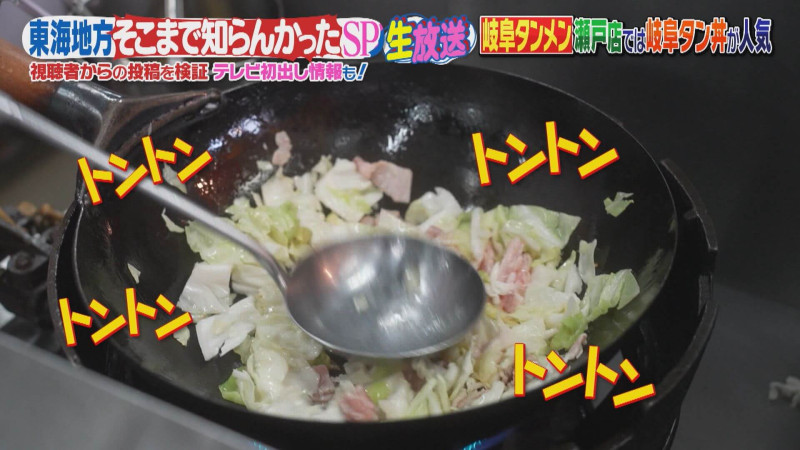
The next submission was, "Only Aichi's Seto store of Gifu Tanmen offers a special menu."
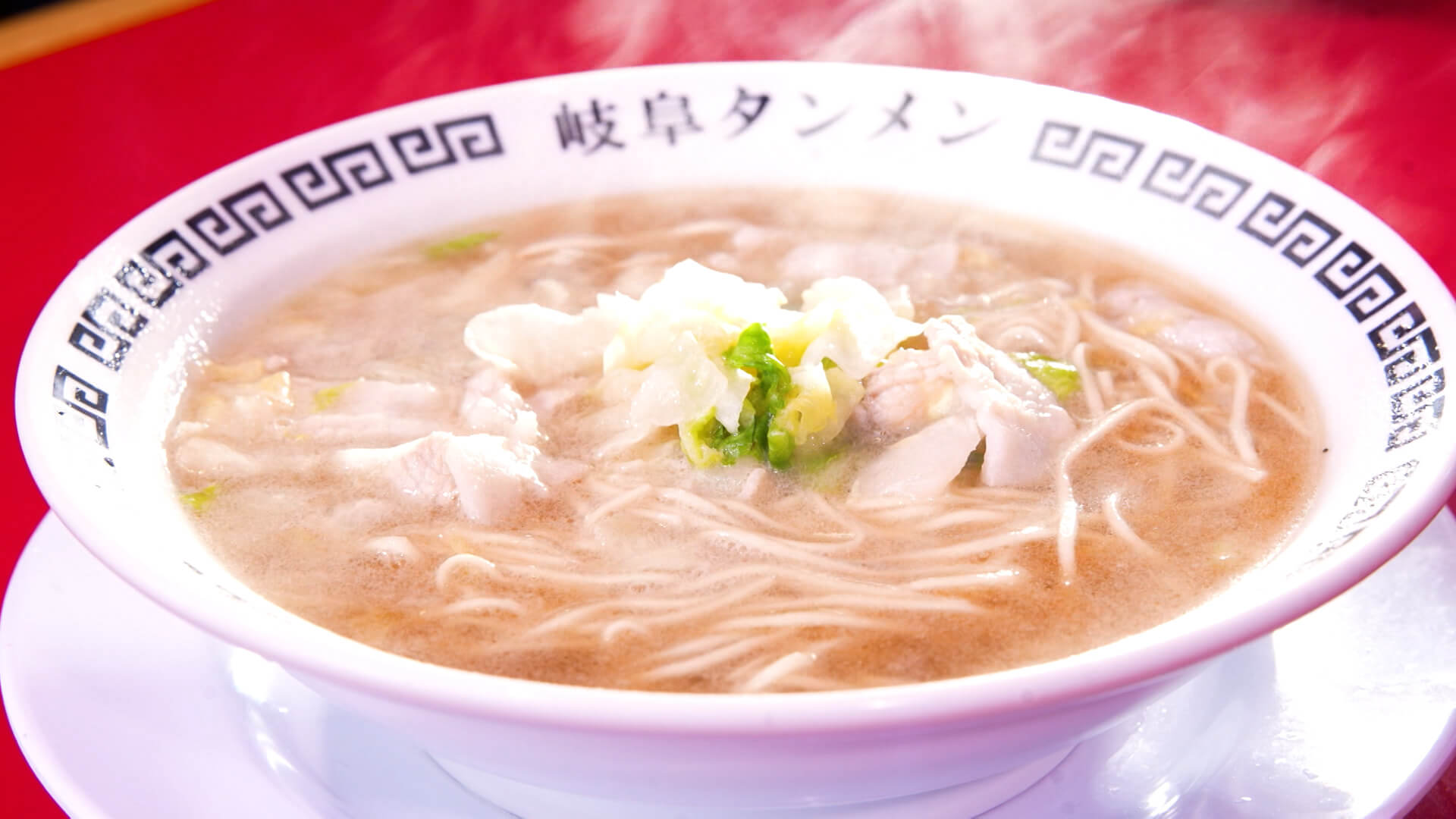
Gifu Tanmen is the soul food of Gifu Prefecture. It features healthy ingredients such as napa cabbage, cabbage, and pork, and a soup infused with the umami of vegetables. Many people drink the entire soup, which is made using a special method of pounding the ingredients. Pounding the vegetables releases their moisture, allowing their umami to dissolve into the soup.
For each bowl of Gifu Tanmen, the ingredients are pounded approximately 240 times! Ladles breaking and holes appearing in pots are commonplace. People line up even at 10 PM for a bowl that takes so much effort.
To investigate the special menu, the program went to the Seto store.
From the opening at 11 AM, for one hour, all 10 people interviewed ordered Gifu Tanmen. After waiting another hour, someone ordered the special menu!
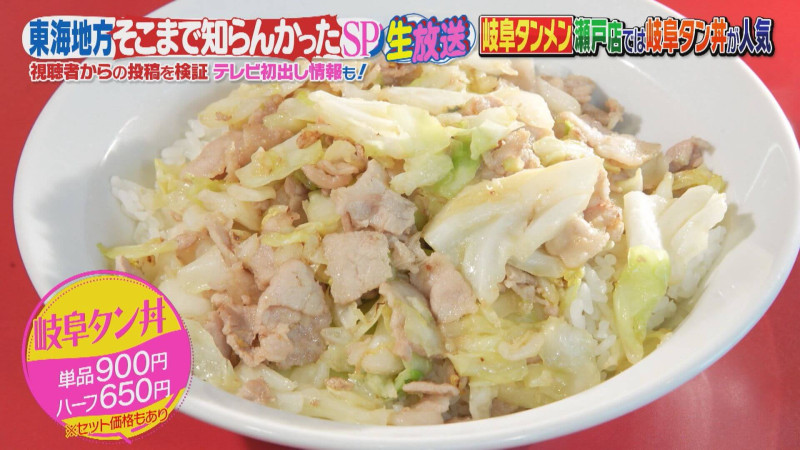
The special menu, "Gifu Tan Don," is a rice bowl topped with the same ingredients as Gifu Tanmen. Of course, the ingredients are thoroughly pounded. By stir-frying them with a slightly sweeter sauce than Gifu Tanmen, the seasoning makes the rice even more appealing.
Gifu Tanmen was actually founded in Inazawa City, Aichi, not Gifu Prefecture. According to Hiroi, the public relations representative, there was a menu item called "Itaya Meshi," which was very similar to "Gifu Tan Don," named after the former store name "Tanmen Senmonten Itaya."
With the closure of the Itaya store, Itaya Meshi disappeared from the menu, but it was revived as Gifu Tan Don during the COVID-19 pandemic, and takeout orders surged. As a result, it began to be sold at four stores, including Seto.
Vending machine where you can buy limited edition Yukari products
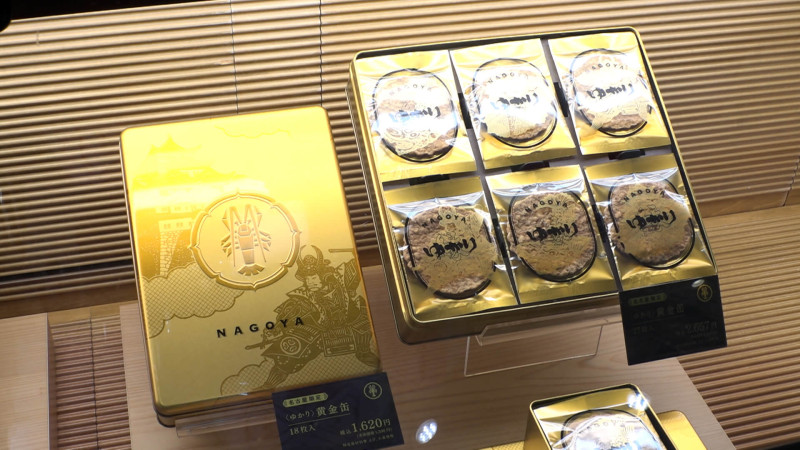
The next submission was, "A golden vending machine has appeared where you can buy Yukari's golden can."
Bankaku Sohonten's "Yukari" has sold over 3.5 billion pieces in total and is the number one most popular souvenir at Nagoya Station (according to JR-PLUS, June 1-30, 2026). It operates approximately 120 stores from Hokkaido in the north to Kumamoto in the south.
In May 2026, a golden vending machine where you can purchase the Nagoya-exclusive "Yukari Golden Can" appeared near car number 6 on the Tokaido Shinkansen down platform at Nagoya Station. Payment is cashless only, and the price is 918 yen for 10 pieces, the same as in stores.
By the way, there are rumors that "Yukari in the golden can contains gold leaf" and "Yukari in the golden can has a higher proportion of shrimp," but the contents are exactly the same as regular Yukari.
From CBC TV "DELA LOVER" broadcast on July 29, 2026
ⓘThis translation was generated using AI and may contain inaccuracies.
Recommendations