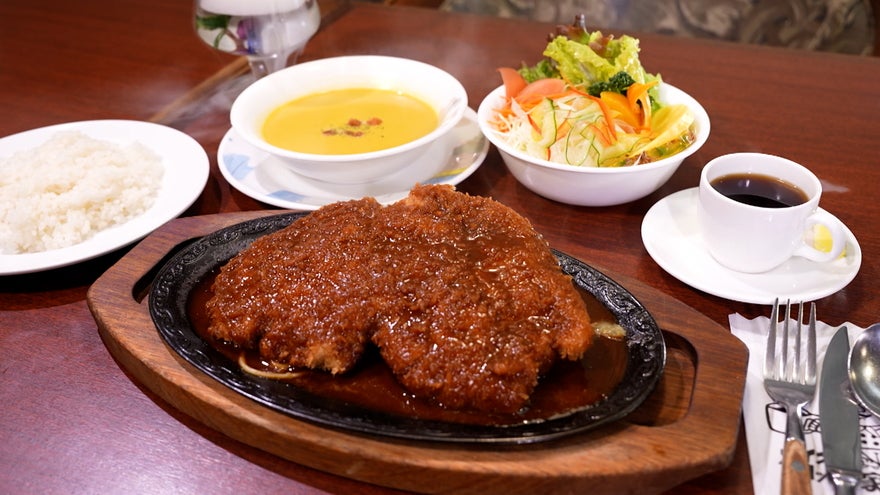
Was the birthplace of Nagoya's specialty in Mie!? Miso sauce finished with lemon juice! What is "Western-style miso katsu" eaten with a knife and fork?

Index
"Ota x Ishii DELA LOVER" is a variety show where Bakusho Mondai's Hikaru Ota and TV Host Ryoji Ishii delve deep into the classics of the Tokai region! This time, it's a special feature on the popular Nagoya specialty "miso katsu". When DELA LOVER surveyed "favorite Nagoya specialties," the result was that "Yabaton," the "king of miso katsu," was number one. In fact, there are many famous miso katsu restaurants in Gifu and Mie!
Miso Katsu from a long-established Western restaurant, older than Yabaton?
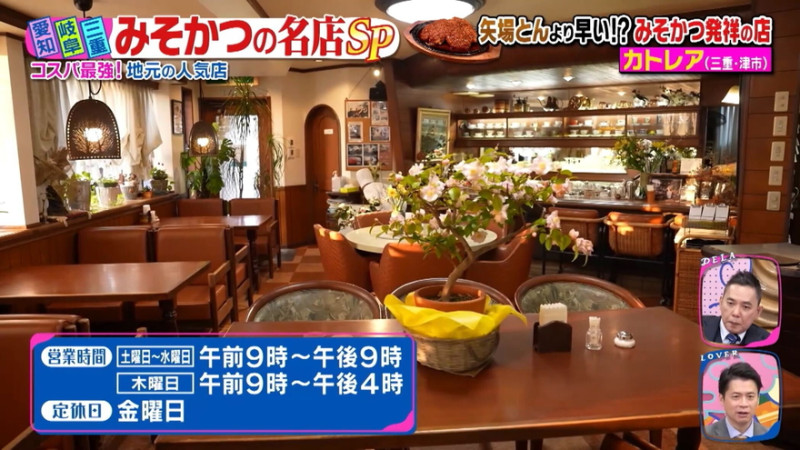
The famous miso katsu restaurant in Mie is "Kind Cook's House Cattleya" in Tsu City. It is a long-established restaurant founded 61 years ago, about a 20-minute walk from Kintetsu Nagoya Line "Tsu-shinmachi Station".
You can enjoy over 40 kinds of authentic Western dishes, such as "Normandy-style Omelet Rice" with crab claws, "Regular Hamburg Steak" with concentrated meat flavor, and "Seafood Doria Gratin".
Among them, the voluminous "miso katsu" has been a popular menu item since the restaurant's founding. In fact, Cattleya is said to be the "birthplace of miso katsu".
According to owner-chef Kazuaki Tani, who has been dedicated to Western cuisine for 70 years and still stands in the restaurant every day without rest, the restaurant opened in 1965.
According to Mr. Tani, Western cuisine was not widely known in the 1960s, so he decided to offer miso katsu, which incorporates miso that is familiar to Japanese people, in order to let many people enjoy Western cuisine.
The most widely accepted theory is that miso katsu originated from dipping kushikatsu into a pot of doteni (stewed offal), but it is also said that Cattleya, which started in 1965, was the first to serve katsu with miso sauce poured over it.
Miso sauce with a refreshing taste!
According to Mr. Tani, Cattleya's miso katsu is "Western-style miso katsu." He says there are three unique aspects of a Western restaurant.
Currently, the owner, Kazuaki, is mainly in charge of preparation. The main cooking is entrusted to his son, Tomoki.
The meat is domestic pork loin cut into approximately 120g pieces. By trimming unnecessary fat, a balance with the red meat is achieved, making it more palatable.
Pounding the meat to make it thin and tender is also a key point. Making it thin ensures even cooking and a moist texture. This process is essential for creating the juicy meat, crispy coating, and the harmonious blend with the miso sauce.
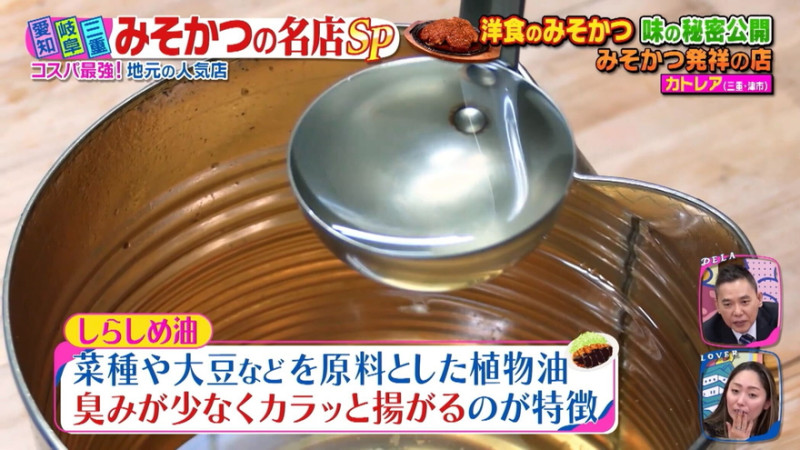
After careful preparation, the meat is coated with flour, egg, and fresh breadcrumbs. Fresh breadcrumbs, unlike dried breadcrumbs, have a coarser grain, which results in a crispy fried texture. Since the coating tends to peel off easily, it is firmly pressed on and then fried in oil at approximately 185℃. The oil used is vegetable-based "shirashime oil," made from rapeseed and soybeans, which is characterized by less odor and a crisp finish.
The making of the miso sauce, which is the key to the flavor, is also fully revealed. The miso used is aged for three years. Three years is considered the best, as aging it too long would make it too rich.
Red miso is combined with sugar, and seasonings such as ichimi chili pepper, black pepper, and garlic pepper are added. Then, bouillon, which is the "lifeblood of a Western restaurant," is combined with the miso. Adding bouillon enhances the richness, mellowness, and umami of the vegetables.
The bouillon is made by simmering chicken bones, beef tendons, carrots, onions, and several other aromatic vegetables over low heat for more than six hours. During simmering, scum is carefully removed, making it a time-consuming process.
Cattleya's biggest feature is its refreshing miso sauce. The secret lies in the "lemon juice" added at the end. It neutralizes the fat of the katsu, leaving a refreshing taste in the mouth. This completes the Western-style miso katsu, served with a knife and fork.
The miso katsu recipe already existed in 1960 when Kazuaki was training. Looking at the valuable recipe from that time, red miso, bouillon, and other ingredients were written down.
A must-try! Affordable miso katsu!
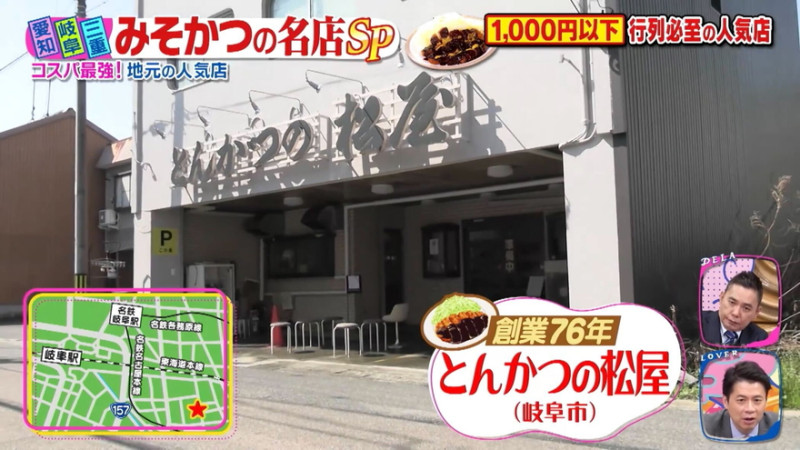
The famous miso katsu restaurant in Gifu is "Tonkatsu no Matsuya" in Gifu City. It is a long-established restaurant founded 76 years ago, located in a quiet residential area, about a 15-minute walk from JR "Gifu Station".
Opening hours are from 11:00 AM and 5:00 PM. As opening time approaches, more and more customers gather. The parking lot, which can accommodate about 20 cars, is full by 11:00 AM. Just before opening, there was a line of over 30 people. On Saturdays, about 400 people visit.
The most popular item is the "Miso Katsu (Regular)". It's a voluminous 150g for 830 yen! The "Miso Katsu (S)" at 100g is 650 yen, and the "Miso Katsu Double" at 250g is an astonishingly cheap 1050 yen.
Miso katsu is ordered as a single item, so you can combine it freely with rice, omelet rice, etc.
"If you want to make your restaurant prosperous, be cheaper and more delicious than anywhere else."
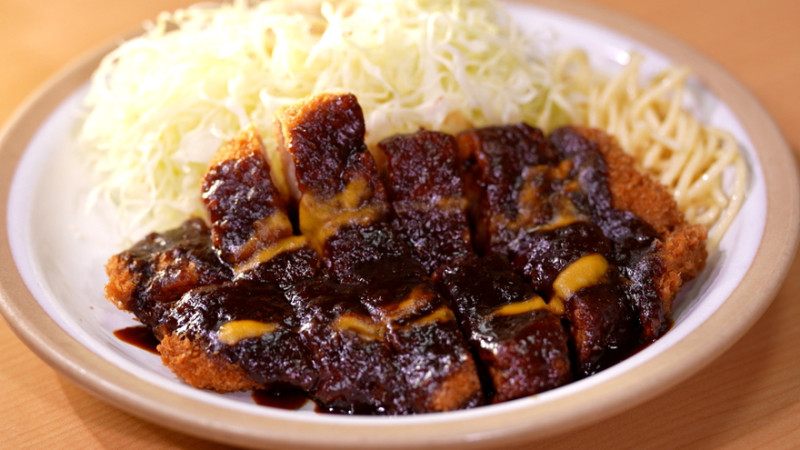
The program infiltrated the kitchen to uncover the secret of the low prices.
Matsuya uses pork shoulder loin. According to the third-generation owner, Satoru Goto, shoulder loin used to be half the price of loin, so his great-grandfather started using it to offer customers affordable meals.
Matsuya's motto, passed down through generations, is "If you want to make your restaurant prosperous, be cheaper and more delicious than anywhere else." They have upheld this motto and still offer shoulder loin today.
Shoulder loin, compared to loin, has more excess fat and sinew, so to serve it deliciously, it requires a lot of time-consuming preparation, such as removing sinews. On this day, being a busy Saturday, they spent over three hours preparing the meat, from 7:30 AM until just before opening.
Parts unsuitable for katsu from the preparation process are thinly sliced into small pieces of meat. By utilizing them in other dishes such as yakisoba or tonjiru (pork miso soup), they can pass on the savings to customers.
Excess fat unsuitable for cooking is put into the fryer. By using it as lard for frying katsu, the coating becomes crispy, and the umami of the pork is added. They make the most of every part, even the unnecessary ones, without sparing effort, embodying the "mottainai spirit" (a sense of regret concerning waste). This was the secret to Matsuya's affordable prices.
To create a crispy coating that doesn't lose to the miso, they experimented with various breadcrumbs and now mix two types of fresh breadcrumbs: a moist type and a dry type. Even though it's time-consuming, Matsuya's style is to coat each piece individually as orders come in.
The miso sauce, which is the key to the flavor, is made sweet, calculated to pair with mustard. According to Mr. Goto, people in Gifu prefer a sweeter taste. The ratio of sugar to miso is a bit higher.
From CBC TV "Deraraba" broadcast on April 22, 2026
ⓘThis translation was generated using AI and may contain inaccuracies.
Recommendations